How to use
- Measure your blood pressure with a validated home monitor, following the steps below.
- Enter the top number (systolic) and the bottom number (diastolic).
- Read your American Heart Association category and the suggested next step.
- Click Save reading to keep it in your history on this device, so you can compare readings over time.
Blood pressure chart for adults
These are the American Heart Association categories for adults. If your two numbers fall into different categories, the higher category applies: 125/85 counts as stage 1, not elevated.
| Category | Systolic (top) | Diastolic (bottom) | |
|---|---|---|---|
| Normal | Less than 120 | and | Less than 80 |
| Elevated | 120–129 | and | Less than 80 |
| Stage 1 hypertension | 130–139 | or | 80–89 |
| Stage 2 hypertension | 140 or higher | or | 90 or higher |
| Hypertensive crisis | Higher than 180 | and/or | Higher than 120 |
Does normal blood pressure change with age?
For adults, the categories above are the same at every age. What changes is how common high blood pressure is: arteries stiffen over time, so systolic pressure tends to rise, and nearly half of US adults have high blood pressure. Your doctor may set a personal target based on your age and other health conditions; for most adults it is below 130/80.
Children and teens are different: their blood pressure is judged against others of the same age, sex and height, so adult categories do not apply under 18.
How to measure blood pressure at home
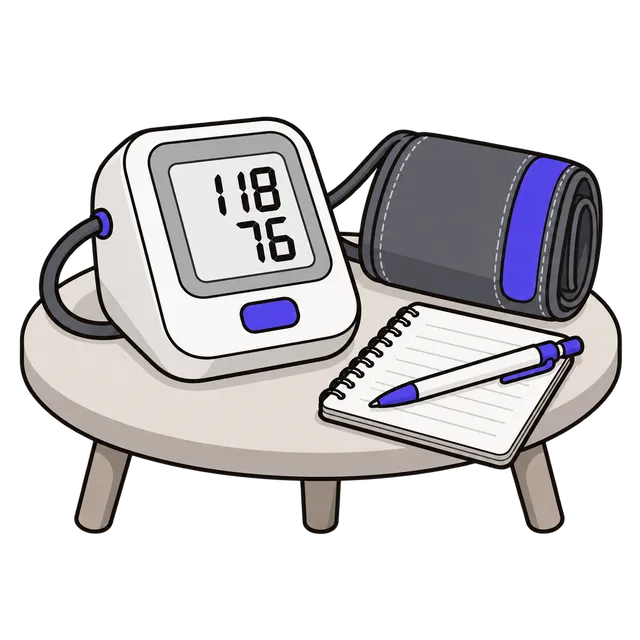
Avoid caffeine, exercise and smoking for 30 minutes and empty your bladder. Sit with your back supported and your feet flat on the floor for 5 minutes. Rest your arm on a table so the cuff, on bare skin, is at heart level. Don't talk during the reading.
Take two readings a minute apart and record both. Measuring at the same times each day, for example morning and evening, gives your doctor the most useful picture.
Frequently asked questions
What is a normal blood pressure?
For adults, normal is a top number below 120 and a bottom number below 80 mmHg, for example 115/75.
Is 130/80 high blood pressure?
Yes. Under the AHA categories, 130/80 is stage 1 hypertension. One reading is not a diagnosis, so measure again on other days and share the results with your doctor.
What should I do if my reading is above 180/120?
Wait five minutes and measure again. If it is still that high, contact your doctor right away. If you also have chest pain, shortness of breath, back pain, numbness, weakness, vision changes or trouble speaking, call 911.
Which number matters more, the top or the bottom?
Both matter. After age 50, the top (systolic) number is the stronger predictor of heart disease and stroke for most people.
Is this tool a medical device?
No. It explains a reading you have already taken. It does not measure blood pressure or replace advice from your doctor.