How to use
- Choose what to check: Node.js, Bun, the Python Brotli or brotlicffi package, the Brotli library itself, or a Debian/Ubuntu brotli package.
- Run the command shown under How to get it on the server, in the container image or in CI, and paste the output (or just the version).
- Read the verdict and the fixed version. Copy the update command, then restart the service and rebuild images.
- If you can't update today, copy a temporary block from the bottom of the tool.
What HTTP2Shell is
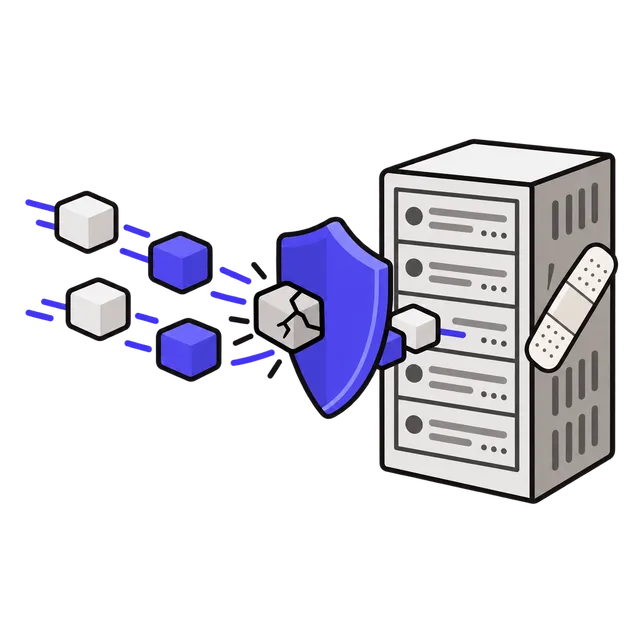
HTTP2Shell is a nickname for CVE-2026-111497, the same bug first called Node2Shell. It is an out-of-bounds write in Google's Brotli decoder, versions 1.0.3 to 1.2.0. A malformed block switch was treated as "need more input" instead of a format error, so the streaming decoder kept writing into an eight-byte internal buffer. Google rates it 9.2 (critical) on CVSS 4.0; Node.js rates it high.
Any program that decompresses attacker-supplied Brotli data with an affected decoder can be hit: a crash, leaked memory, or possibly code execution. The name changed because the bug is not limited to Node.js; Python packages, Bun and other software that bundle Brotli are affected too. There is no separate "HTTP2Shell" flaw, and despite the name it is a bug in the Brotli decoder, not in the HTTP/2 protocol.
Are you exposed?
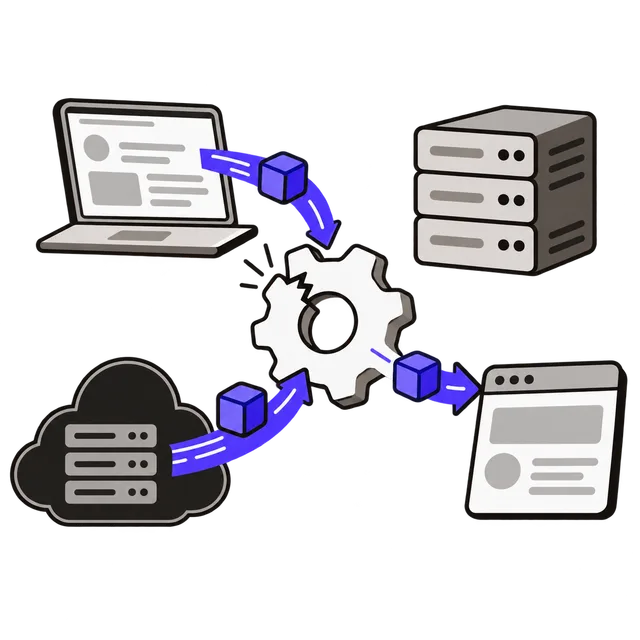
Brotli is decoded in two places. Inbound: your server decompresses a request body sent with Content-Encoding: br. Express 5 does this through body-parser 2.x, which decodes br by default. Express 4 (body-parser 1.x) does not. Outbound: your app downloads a response from a server you don't control, and the HTTP client decodes Content-Encoding: br automatically. Node.js fetch(), Bun fetch(), and Python requests, urllib3, httpx and aiohttp (when a Brotli package is installed) all do this.
Apache's mod_brotli and nginx only compress responses; they do not decode request bodies by default.
Fixed versions

Fixes published from 21 October 2026:
| Software | Fixed in |
|---|---|
| Node.js 22 / 24 / 26 | 22.23.4 / 24.22.1 / 26.12.1 |
| Node.js 20, 23, 25 and older | No fix (end of life) |
| Bun | 1.4.4 |
| Python Brotli / brotlicffi | 1.2.1 / 1.2.1.0 |
| Google Brotli library | 1.0.10, 1.1.1, 1.2.1 |
| Debian 12 / 13 | 1.0.9-2+deb12u1 / 1.1.0-2+deb13u1 |
How to check and fix
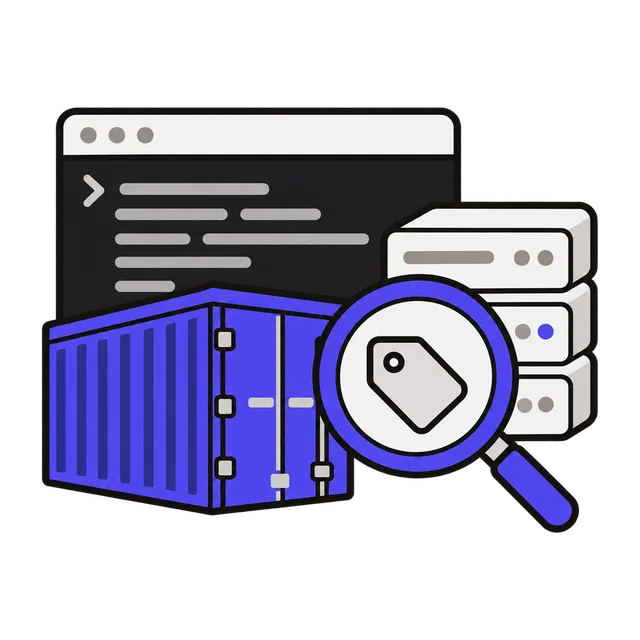
Run node --version inside the real runtime: each container image, CI runner and serverless function, not only the host. A tag such as node:24 does not tell you the patch number, so rebuild on a patched base image. For Python, run pip show Brotli brotlicffi in every environment and image; pipdeptree -r -p Brotli shows what pulled it in.
Debian's Node.js uses the system Brotli library, so update the brotli package as well. Ubuntu listed the CVE as "needs evaluation" with no fixed package yet. Red Hat-family and Alpine builds keep their own numbers; check the vendor's advisory. Bun binaries built with bun build --compile embed the runtime and stay vulnerable until rebuilt.
If you can't update yet

Reject requests whose Content-Encoding contains br at the reverse proxy or load balancer, or turn off request decompression in your framework (express.json({ inflate: false })). For outbound requests, removing br from Accept-Encoding is not enough, because a malicious server can send Brotli anyway; disable decompression for untrusted URLs (Bun: fetch(url, { decompress: false })) or, in Python, uninstall Brotli and brotlicffi. Run Node.js as an unprivileged user and keep secrets out of its environment. These steps reduce risk; they do not replace the update.
Frequently asked questions
Is HTTP2Shell being exploited?
As of 23 October 2026 it was not in CISA's Known Exploited Vulnerabilities catalog and no attacks in the wild had been confirmed. Researchers have publicly reported crashes and code execution in lab conditions, so treat it as urgent.
Is HTTP2Shell the same as Node2Shell?
Yes. Both names refer to CVE-2026-111497. HTTP2Shell came into use on 23 October as the bug turned out to affect more than Node.js.
Is it related to PHP2Shell?
No. PHP2Shell (CVE-2026-109618 and CVE-2026-109619) is a separate flaw in PHP, disclosed the same week. Check PHP with the PHP2Shell Checker.
My site runs on nginx or Apache. Am I affected?
Not through the web server itself in its default setup. You can still be affected through an application behind it, such as a Node.js or Python app, or through a module that decodes Brotli request bodies.
Is what I paste uploaded?
No. The version check runs in your browser, and nothing you paste leaves your device.